

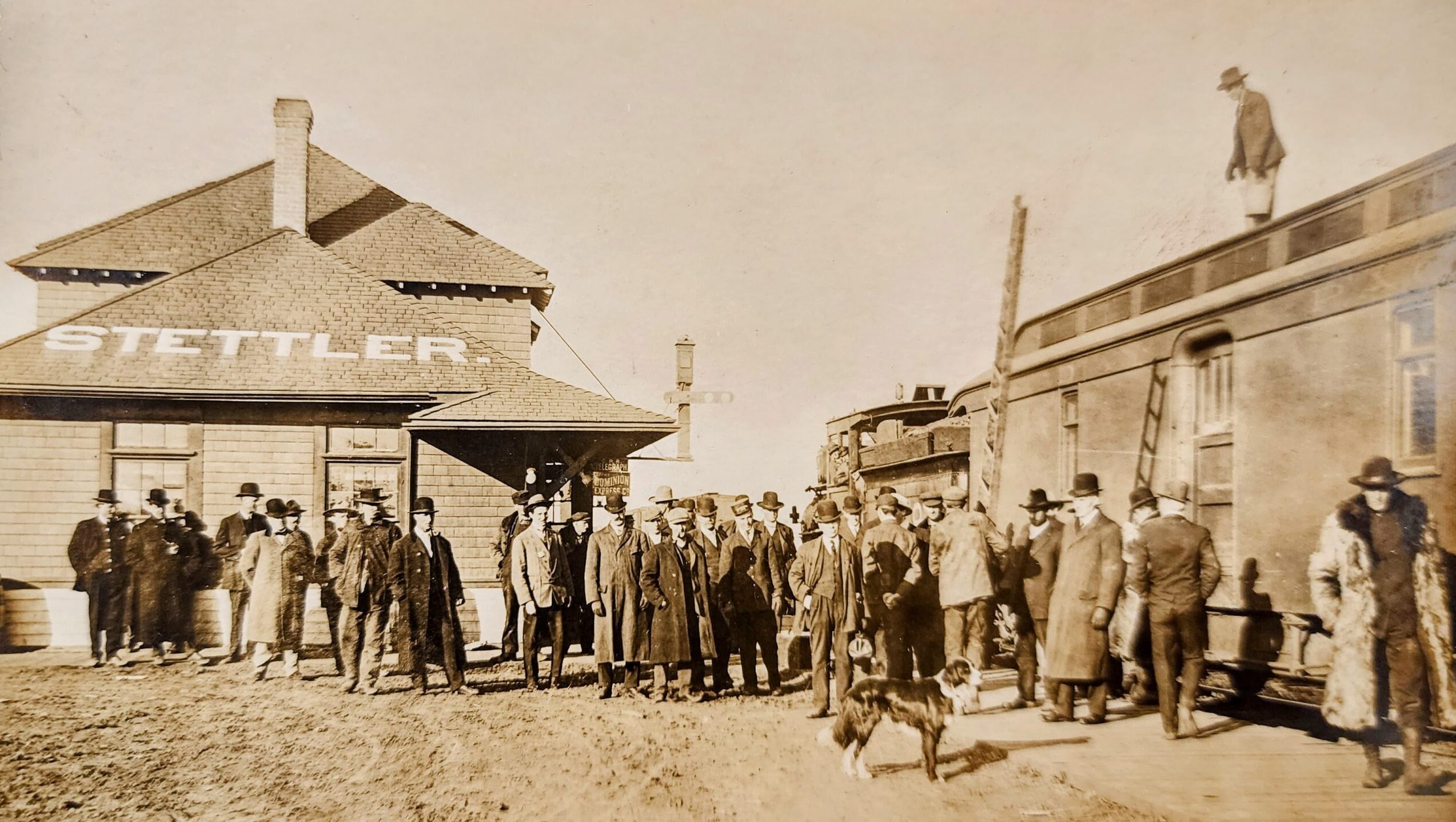
Over a century after a handful of pioneers met in a 12-by-16-foot shack to map out a community that barely existed, the Town of Stettler has marked its 120th anniversary.
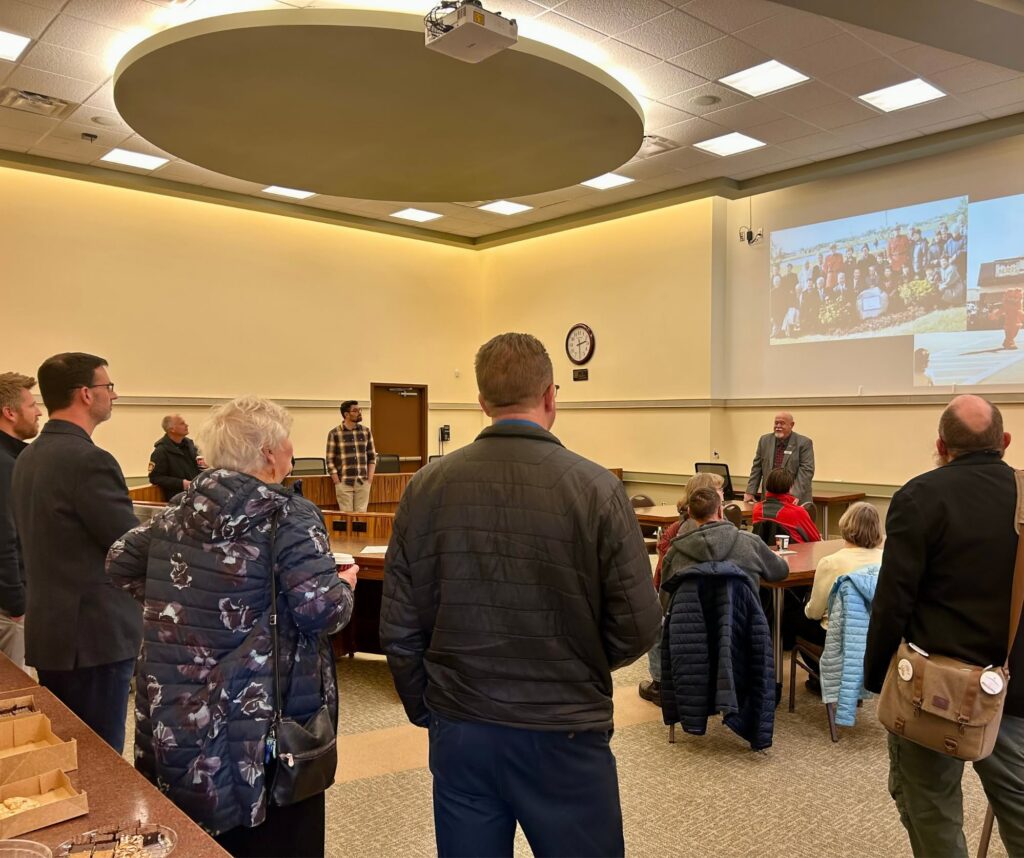
Residents gathered at the town office on Nov. 23 to commemorate the date in 1906 when Stettler transitioned from a village into a town.
“Stettler has a lot to be proud of,” says Mayor Gord Lawlor, the 22nd mayor to lead the east-central Alberta community of nearly 6,000.
“We’re so grateful to those who helped establish our town, as well as the generations of residents, volunteers, businesses and community organizations who have and continue to contribute every day.”
Archival editions of The Stettler Independent capture the breakneck pace of the town’s earliest days.
In late November 1905, while settlers were still searching for the townsite, local businessmen organized the Stettler Board of Trade inside a tiny shack.
Twelve months later, when word of town status arrived on Nov. 23, 1906, Stettler had already grown to boast six hotels, two banks, a creamery, graded streets & broad sidewalks.
On Nov. 29, 1906, 40 citizens packed into the dining room of namesake founder Carl Stettler’s National Hotel for the Board of Trade’s first banquet.
Board of Trade president N. B. McGillivray declared that having reared “baby Stettler,” the board and village overseer George C. Bentley were ready to hand governance over to an elected mayor and council.
Days later, McGillivray defeated Bentley in Stettler’s inaugural mayoral race, a contest in which Bentley published a newspaper appeal defending his stewardship of village finances and denying rumours he planned to leave town.
At its first meeting, the new council took on roughly $500 in village debt alongside contracts for a town well, weigh scales and a fire hall.
Two decades later, in November 1926, the Board of Trade’s annual banquet reflected how quickly the frontier outpost had grown.
Guests had to be served in shifts as town merchants and district farmers honoured winners of the local Marquis wheat crop competition, whose fields averaged 50 bushels per acre.
During a slideshow of historical photos from the town’s past, Lawlor noted “This anniversary is a great opportunity to celebrate where we’ve been and look forward to what’s ahead.”

Author: Landin Chambers
Landin Chambers is a news reporter for Hometown Media Stettler. He has a background in broadcast news, with previous roles in Prince George, Red Deer and Calgary. You may also see him as a cameraman for the Stettler Wildcats and Stettler Imperials. Have a story idea? Email: lchambers@htproductionsmedia.ca